
Why ISLE matters to international buyers
International exhibitions are useful only when buyers move beyond impressive demonstrations and examine how a complete system will perform after delivery. For importers, distributors, systems integrators, project contractors, event companies, retailers, architects and advertising businesses, the real value of ISLE lies in the ability to compare display technologies, cabinet construction, control platforms, supporting equipment and supplier capability in one place.
A successful visit should answer commercial and technical questions: Is the proposed screen suitable for the viewing distance? Can it be maintained from the available side? Are the controller and receiving cards included? Can replacement modules be supplied later? Which party will provide drawings, commissioning, training and warranty support? These questions matter more than the brightness of a demonstration video.
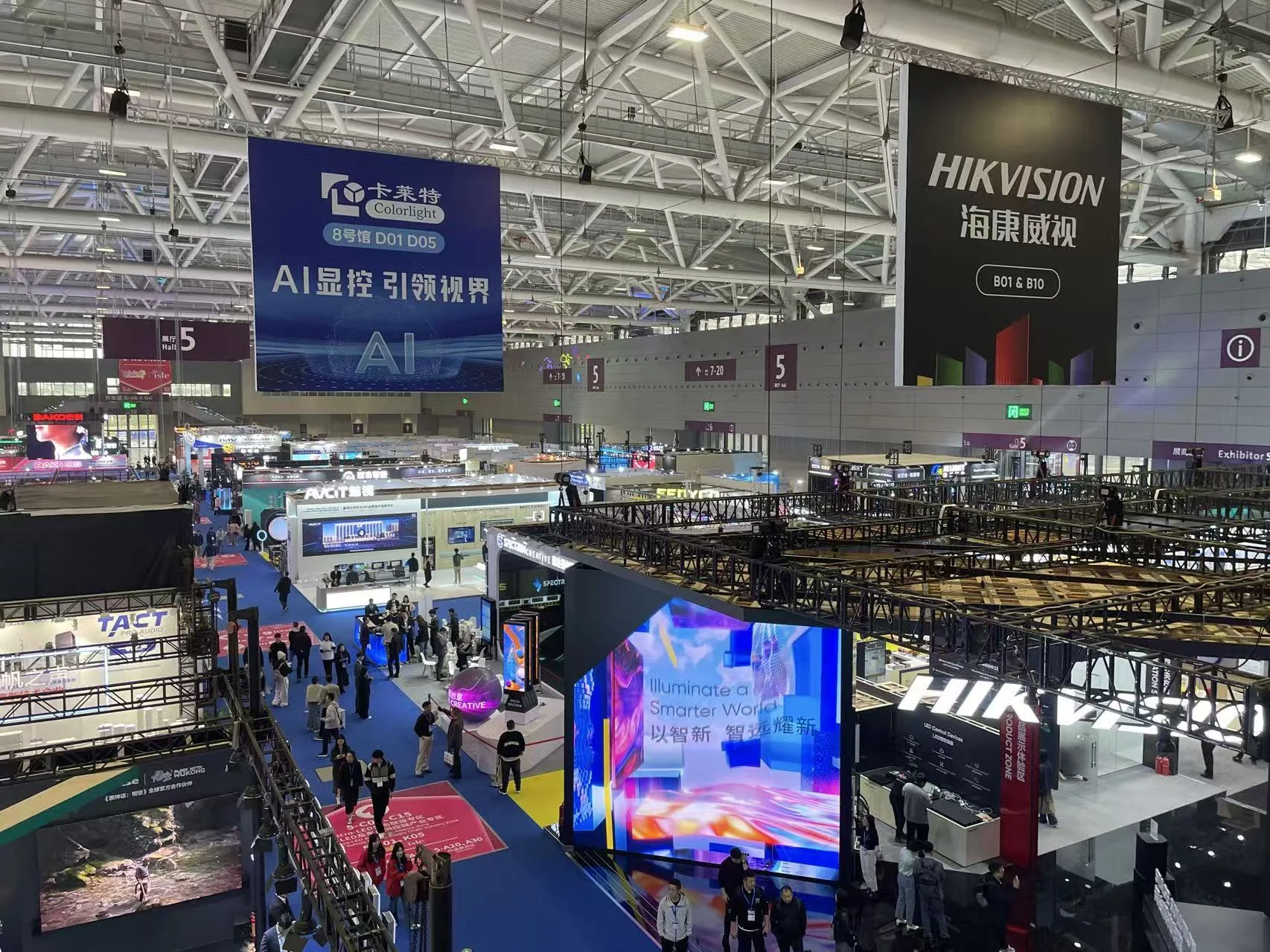
What ISLE is and what the 2025 edition represented
The official English name is the International Smart Display and Integrated System Exhibition (Shenzhen), commonly known as ISLE. Its scope covers LED displays and applications, digital signage, signal processing, integrated audiovisual systems, professional audio, stage equipment, core components and related installation products.
ISLE 2025 was the tenth edition. It was held from 7 to 9 March 2025 in Halls 5–8 at Shenzhen World Exhibition & Convention Center. The official post-show report records an exhibition area of 80,000 square metres, more than 1,000 online and on-site exhibitors, more than 200 procurement groups, more than 180 major product launches, over 20 forums and seminars, and more than 220,000 professional-visitor visits. The last number is reported as visits and should not automatically be interpreted as unique individuals.
The venue is in Bao’an District, close to Shenzhen Bao’an International Airport. Shenzhen World states that its first phase contains 19 indoor halls. For international buyers, the location is practical because the exhibition brings display manufacturers, control-system companies, component suppliers and audiovisual integrators into the same venue, while many relevant factories and engineering teams are located within the wider Pearl River Delta manufacturing region.
Official edition source: ISLE 2025 Post-Show Report
Official venue source: Shenzhen World venue overview
Display technologies buyers can compare
Fine-pitch and standard indoor LED
Fine-pitch LED is commonly considered for meeting rooms, command centres, studios, premium retail and other locations where viewers may stand close to the screen. A smaller pixel pitch can improve close-range detail, but it also increases pixel density, processing requirements and usually cost. The correct pitch should be selected from viewing distance, physical screen size, required resolution, content type and budget—not from a belief that the smallest available number is automatically best.
Outdoor LED displays
Outdoor projects require suitable brightness, weather protection, thermal management, electrical protection, structural engineering and maintenance access. A roadside billboard, stadium screen, shopfront sign and coastal installation can require different cabinet designs and protective treatments. Buyers should ask for the front and rear enclosure ratings where applicable and confirm that any IP claim is supported by a report for the offered model.
Rental and event LED systems
Rental cabinets are repeatedly transported, assembled and dismantled. Evaluation should include weight, handles, corner protection, fast locks, alignment, curve options, hanging and stacking systems, connectors and flight cases. Event companies should also test camera performance because a screen that appears stable to the eye can show bands or flicker when recorded.
Transparent, mesh and creative LED
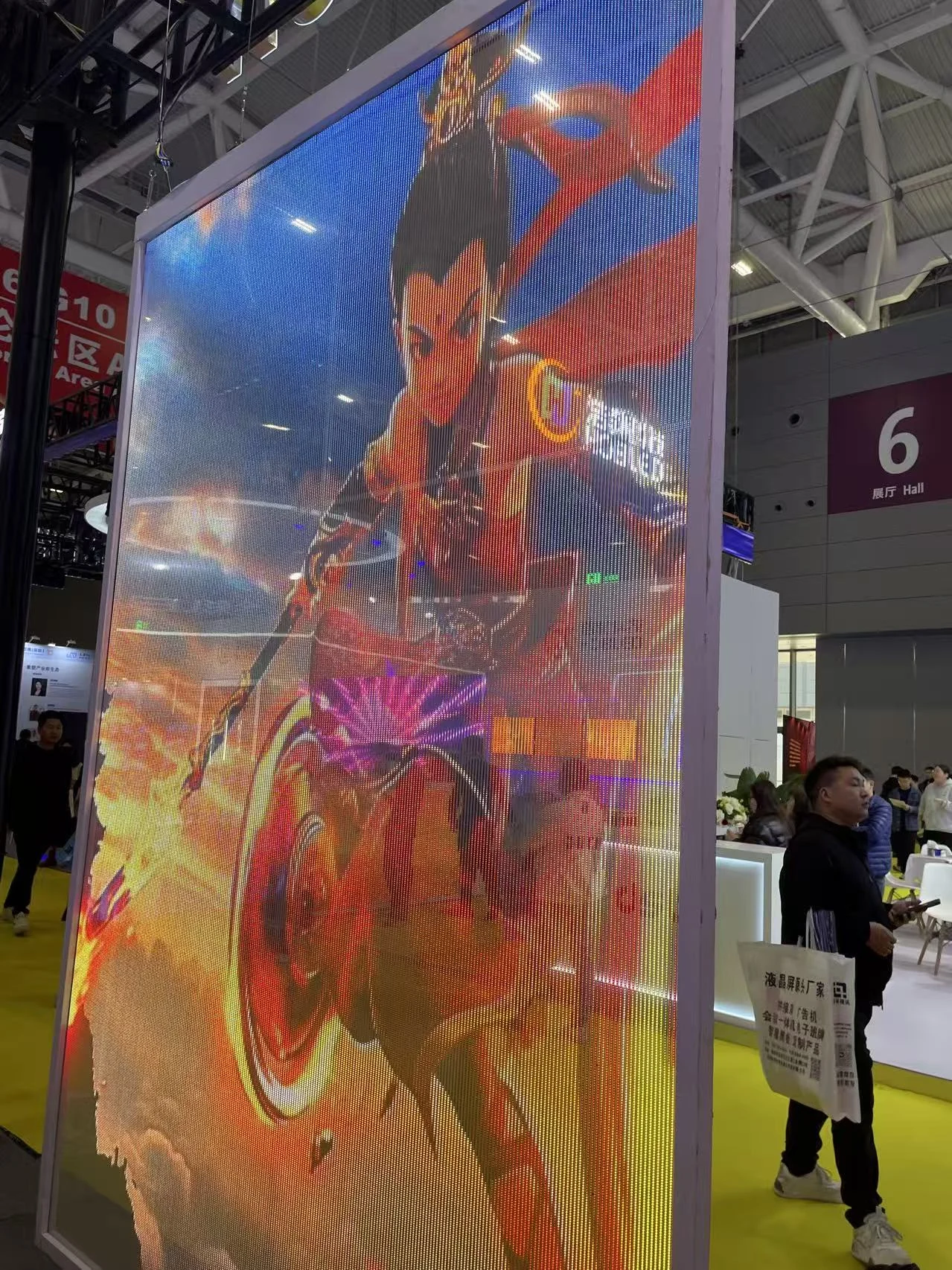
Transparent LED can be used for retail windows, glass façades and exhibition installations. Mesh or grille designs can suit very large architectural surfaces where openness, lower wind resistance and lower structural weight are important. These products involve trade-offs between transparency, pixel density, brightness, viewing angle, structural visibility and appearance when the content is dark or switched off.
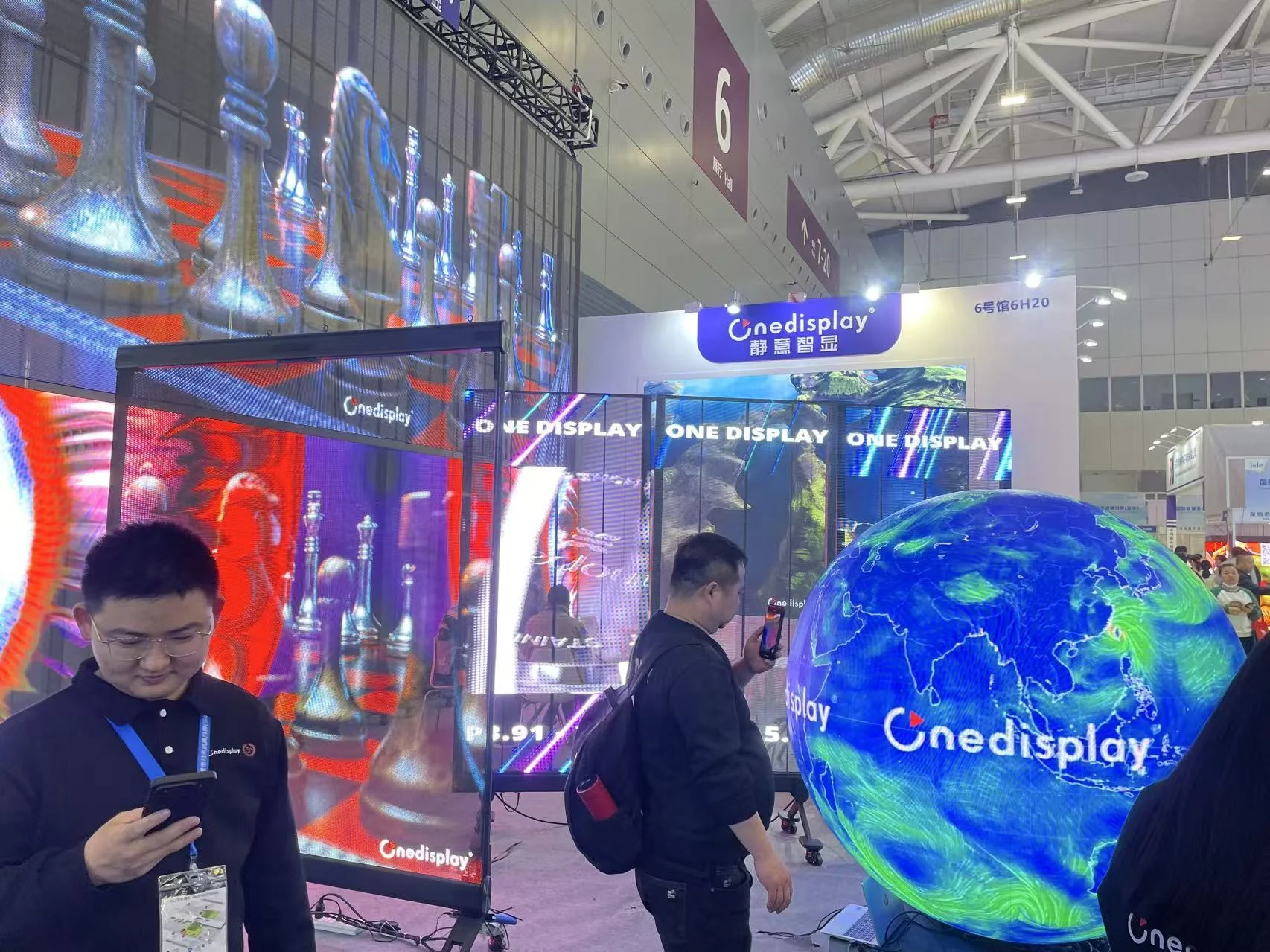
Flexible modules and specially designed cabinets can form curved, cylindrical, concave, convex, spherical and irregular displays. Creative geometry increases engineering complexity. Buyers should request structural drawings, module layouts, resolution calculations, content templates, installation instructions and a clear method for accessing and replacing individual modules.
Control systems and integrated audiovisual equipment
The visible display is only one part of the system. A typical signal path includes the video source, processor or controller, sending equipment, receiving cards and LED modules. Depending on the application, the project may also require media players, fibre transmission, signal converters, content-management software, brightness sensors, remote monitoring and redundant power or data paths.
The processor prepares incoming content by scaling, switching or arranging sources. The sending system transmits display data, while receiving cards inside the cabinets distribute the required information to the modules. Configuration files, cabinet mapping and calibration data are important service assets. A quotation that says only “control system included” is not detailed enough.
- Exact controller, processor and receiving-card models
- Maximum pixel capacity and output-port loading
- Supported inputs, resolutions and frame rates
- Signal and power redundancy options
- Fibre-transmission requirements
- Configuration, cabinet and calibration files
- Software licences and remote-management functions
- Commissioning responsibility and technical support
Technical reference: NovaStar NovaLCT LED Configuration Tool User Manual
How buyers should prepare before visiting or requesting quotations
Suppliers can produce meaningful proposals only when the buyer provides a clear project brief. Before attending the exhibition or requesting prices, define the application, installation environment and commercial boundaries. Avoid sending only a photo with a request for a price per square metre.
- Indoor or outdoor application and expected operating hours
- Approximate screen width, height and required resolution
- Nearest and typical viewing distances
- Fixed, rental, hanging, wall-mounted or freestanding installation
- Front-maintenance, rear-maintenance or dual-access requirement
- Destination country, local voltage and frequency
- Maximum installation depth and structural limitations
- Temperature, rain, humidity, dust, wind and coastal exposure where relevant
- Content sources, live-camera use and broadcast requirements
- Required delivery date, installation, commissioning and training scope
Site photographs and drawings are especially useful. They help suppliers estimate cabinet layout, frame requirements, cable routes, power distribution and maintenance access. When dimensions are not final, the supplier should state clearly which assumptions were used in the quotation.
How to evaluate exhibitors and verify supplier capability
An exhibitor may be a manufacturer, assembler, brand owner, system integrator, distributor or trading company. None of these roles is automatically unsuitable. The important issue is transparency: who produces the modules and cabinets, who completes assembly, who designs the control system, who performs testing and calibration, and who carries the warranty obligation after export.
Ask for the factory address, production scope, quality-control process, aging-test procedure, calibration equipment, traceability records, monthly capacity and export experience. When the project is important, arrange a factory visit after the exhibition. The visit should examine incoming-material inspection, module or cabinet assembly, aging areas, calibration, finished-screen testing, packaging and spare-parts management.
Warning signs
- The quotation lists only screen size and pixel pitch
- Important component brands or model numbers are withheld
- No cabinet, signal or electrical drawing is available
- Maximum and typical power consumption are omitted
- The supplier cannot identify the controller or receiving cards
- A test report carries a different manufacturer or model number
- There is no defined aging-test or acceptance process
- Warranty responsibility and replacement-part lead time are unclear
Specifications that determine project suitability
| Specification | What the buyer should verify |
|---|---|
| Pixel pitch and resolution | Confirm the physical pitch, active screen dimensions and final horizontal × vertical pixel resolution. Compare total resolution, not pitch alone. |
| Brightness | Request rated and calibrated brightness. Match it to ambient light; excessive indoor brightness can be uncomfortable and waste power. |
| Refresh rate | Confirm the value on the exact module, driver IC, scan ratio and controller configuration. Test with cameras at realistic brightness levels. |
| Grayscale and low-brightness performance | Use dark scenes, gradients and shadows to expose tinting, lost detail, abrupt steps or uneven modules. |
| Colour calibration | Confirm whether calibration is performed by module, cabinet or complete screen and how replacement modules will be matched later. |
| IP rating | Verify front and rear ratings where applicable and request the report for the exact model and enclosure configuration. |
| Cabinet construction | Compare material, size, weight, flatness, locks, alignment, heat dissipation, lifting points and structural connection method. |
| Power consumption | Request maximum and typical consumption for the complete configured display, including the basis used for the calculation. |
| Maintenance access | Confirm front, rear or dual access and ensure the site design provides the physical working space required. |
| Spare parts | Define spare modules, receiving cards, power supplies, cables, masks and other project-specific service items. |
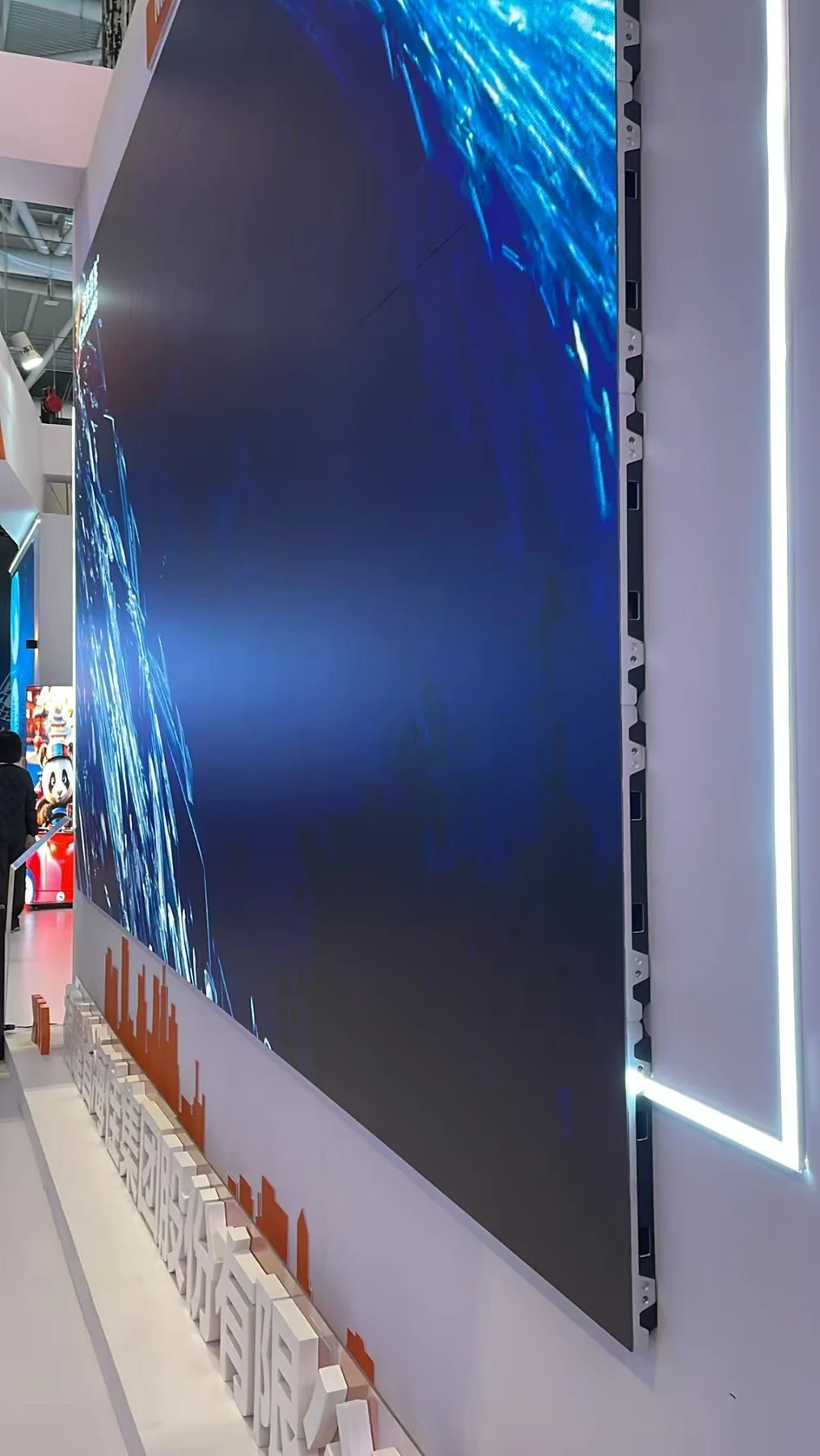
Cabinet depth is easy to overlook during a booth demonstration. It affects wall clearance, ventilation, structural design and maintenance. A slim-looking front surface does not show the frame, connectors, power supplies and service space behind the modules.
Protection-rating reference: IEC explanation of IP ratings and IEC 60529
Technical questions and quotation comparison
A professional inquiry should force each supplier to quote the same scope. Ask the questions below and record the answers in a comparison sheet.
- What are the final screen dimensions, pixel pitch and total resolution?
- What are the module and cabinet dimensions and materials?
- Which LED package, driver IC, power supply and scan ratio are offered?
- What calibrated brightness, refresh rate and grayscale performance are guaranteed?
- What are the front and rear IP ratings where applicable?
- Which processor, controller, receiving cards and software are included?
- What maximum and typical power consumption should be used for electrical planning?
- How is the screen maintained and what access space is required?
- What aging test, calibration and pre-shipment acceptance process will be used?
- Which spare parts, drawings, configuration files, commissioning services and warranty terms are included?
| Quotation area | Information that should be comparable |
|---|---|
| Display | Active area, supplied area, pitch, resolution and application |
| Modules and cabinets | Dimensions, resolution, materials, component brands, scan ratio, weight and maintenance direction |
| Performance | Brightness, refresh rate, grayscale, viewing angle, colour temperature and calibration |
| Electrical and control | Maximum/typical power, voltage, power supplies, processor, controller, receiving cards and redundancy |
| Installation | Structure, cables, distribution equipment, drawings, supervision and commissioning |
| Service and commercial terms | Spare parts, testing, training, warranty, lead time, Incoterm, packing, weight and shipping volume |
The lowest price per square metre may exclude processors, mounting structures, power-distribution equipment, spare modules, flight cases, commissioning or installation materials. Compare the total delivered and operational system—not only the display surface.
Compliance, packaging, installation and after-sales support
Compliance must be evaluated for the finished configuration and destination market. Buyers should verify the manufacturer name, exact model, applicable standards, laboratory, tested voltage and frequency, report date and whether the report covers the complete system or only one component. A certificate or logo shown at a booth should not be assumed to cover every model or every country.
For the European Union, the applicable obligations can include electrical safety, electromagnetic compatibility, hazardous-substance restrictions and other rules depending on the system. CE marking is the manufacturer’s declaration following the applicable conformity-assessment process; it is not a universal certificate issued by one central EU authority. In the United States, electronic equipment and any wireless functions may involve FCC requirements. The precise route should be confirmed for the finished system before import or sale.
Packaging should protect modules, cabinet corners, connectors and control equipment against impact, vibration and moisture. Rental cabinets are commonly supplied in flight cases, while fixed-installation products may use export wooden cases or other project-specific packing. Cases and cartons should be labelled clearly, and the packing list should separate cabinets, modules, processors, cables, spare parts and installation accessories.
Before shipment, obtain the final bill of materials, cabinet layout, signal diagram, electrical diagram, structural drawings where included, configuration files, software information, test records, packing list, installation instructions and warranty terms. Whenever practical, the complete configured screen should be assembled and tested before dispatch.
Warranty terms should state the start date, covered parts, excluded damage, response time, replacement process, international freight responsibilities, engineer travel costs and the expected availability of compatible modules and components.
EU reference: European Commission guidance on CE marking
US reference: FCC radio-frequency device and equipment-authorization information
Common LED display purchasing mistakes
- Choosing the smallest pixel pitch without checking viewing distance or required resolution
- Comparing incomplete quotations by unit price alone
- Ignoring processors, receiving cards, configuration files and redundancy
- Evaluating only bright promotional content instead of dark scenes and camera tests
- Accepting IP or compliance claims without a matching report
- Ignoring cabinet depth, ventilation and maintenance access
- Ordering insufficient spare parts or failing to plan long-term module matching
- Shipping before the complete configured system has been tested
How Giant Gateway supports international buyers
Giant Gateway helps international buyers turn a general LED display requirement into a clearer commercial and technical request. Support can include product request preparation, quotation support, specification comparison, purchase coordination, documentation follow-up, quality follow-up, pre-shipment coordination and shipment coordination.
The objective is to help the buyer communicate the application and required scope clearly, compare proposals on a consistent basis and follow important details from the initial request through preparation for shipment. Giant Gateway does not claim ownership of, representation of or affiliation with ISLE or any brand visible in the editorial photographs.
Frequently Asked Questions
No. It is also relevant to systems integrators, project contractors, event companies, advertising businesses, retailers, architects, venue operators and other buyers planning fixed, rental or creative display projects.
No. A smaller pitch can improve close-range detail, but it raises pixel count and often increases system cost. The correct choice depends on viewing distance, screen size, required resolution, content and budget.
Both allow partial visibility through the installation. Transparent products are commonly considered for glass and retail applications, while more open mesh or grille systems can suit very large façades. Transparency, image density, weight and structural design vary by product.
Receiving cards distribute display data inside the cabinets. Their parameters, cabinet mapping and calibration information are essential for commissioning, maintenance and replacement work.
There is no universal percentage. The quantity should reflect screen size, operating importance, destination, service access and replacement lead time. Spare modules, receiving cards, power supplies, cables and project-specific parts should be discussed.
The quotation should state clearly whether structural design, installation materials, supervision, commissioning and training are included. Local labour, lifting equipment, travel and accommodation responsibilities should also be assigned.
Need support with an LED display product request?
Send Giant Gateway the intended application, screen dimensions, installation environment, destination market and technical requirements for quotation support, purchase coordination, quality follow-up and shipment coordination.
Request Your Order